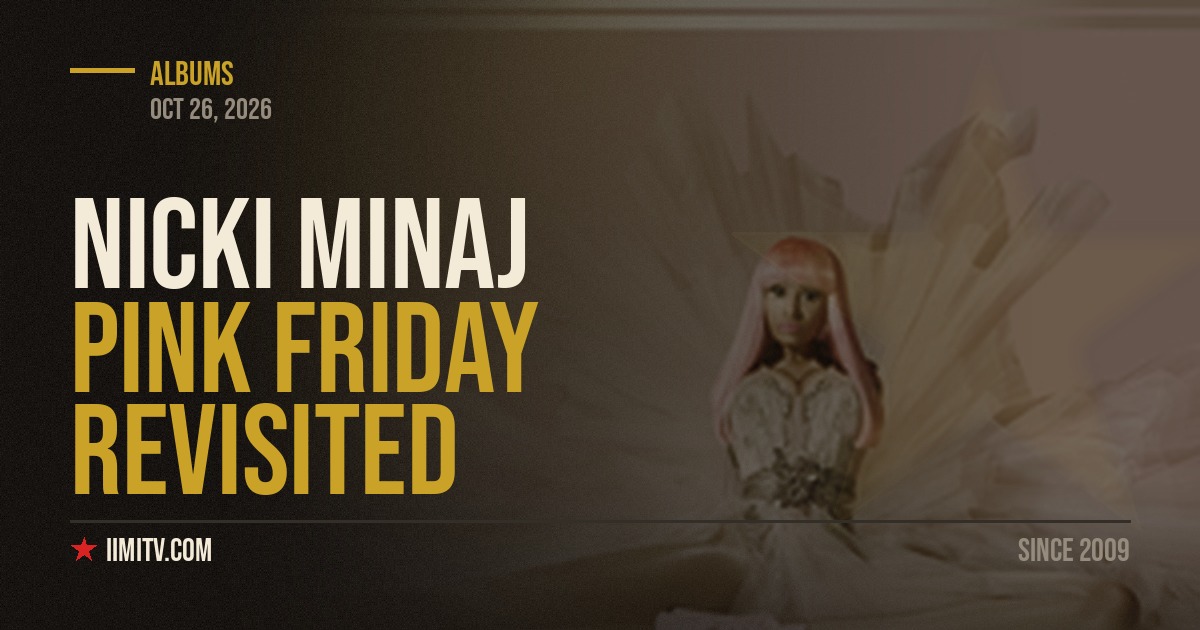
Nicki Minaj released her debut album Pink Friday on November 22, 2010, and it reset what a rap debut could sell, sound like and set in motion. It opened at number two, climbed to number one three months later, and handed the next decade of rap and pop a template it is still using.
The Mixtape Run Behind Pink Friday
Pink Friday was a debut in name only. Minaj, born in Trinidad and raised in Queens, New York, spent three years building a reputation on the mixtape circuit: Playtime Is Over in 2007, Sucka Free in 2008 and Beam Me Up Scotty in 2009, the tape whose “Itty Bitty Piggy” and scene-stealing guest verses made her the most talked-about unsigned rapper in New York. Lil Wayne signed her to Young Money Entertainment in 2009, and a run of guest appearances, from Usher to Kanye West’s “Monster,” meant the album arrived with a persona already fully built: the Harajuku Barbie, the Roman Zolanski alter ego, and a flow that could bend from Queens battle rap to full pop in four bars.
“When I started rapping, people were trying to make me like the typical New York rapper, but I’m not that. I wanted the album to be universal and versatile.”
That versatility was the whole strategy. Where a safer debut would have chosen between the mixtape audience and the pop charts, Pink Friday refused, sequencing hard rap records beside sung hooks and letting the same voice carry both.
A Number One Album Built in Public
The first-week numbers made the argument before the critics could. Pink Friday sold 375,000 copies in its opening week, debuting at number two on the Billboard 200 behind Kanye West’s My Beautiful Dark Twisted Fantasy. At the time, it was the second-highest first-week sales figure ever for a female rapper, behind only Lauryn Hill’s The Miseducation of Lauryn Hill. The album kept climbing and reached number one in February 2011, in its eleventh week on the chart, an unusually slow and durable route to the top.
The guest list mapped the era’s power structure: Eminem trades verses with her alter ego on “Roman’s Revenge,” Drake anchors “Moment 4 Life,” Rihanna lifts “Fly,” and Kanye West and Natasha Bedingfield close the standard edition on “Last Chance.” Pink Friday was certified triple platinum by the RIAA in 2016, and it carried Minaj to three nominations at the 54th Grammy Awards: Best Rap Album, Best New Artist and Best Rap Performance for “Moment 4 Life.”
Super Bass, the Bonus Track That Ate the Album
The strangest chapter of the Pink Friday story sat on the deluxe edition. “Super Bass” was a bonus track, not a planned single, until radio programmers and fans pulled it into rotation and the label had no choice but to service it in 2011. It peaked at number three on the Billboard Hot 100, outperformed every official single on the album, and never really stopped: the RIAA certified it Diamond in 2021, making Minaj the first female rapper to earn a Diamond certification for a solo song, and it has since climbed to twelve times platinum.
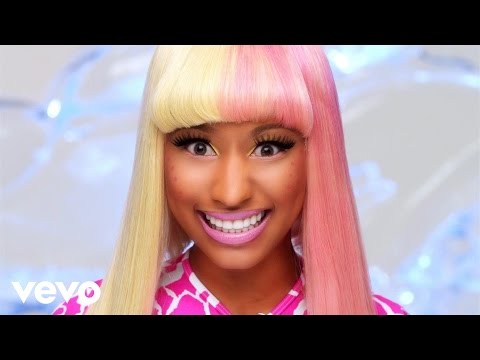
We traced that whole arc in our look back at the ‘Super Bass’ lyrics, meaning and impact. Around it, the singles kept stacking: “Your Love” topped the Hot Rap Songs chart, the first solo song by a female artist to do so since 2002, while “Moment 4 Life” and “Fly” both reached the Hot 100 top twenty. The album was not carried by one hit. It was an assembly line.
The Era Pink Friday Opened
What Pink Friday really sold the industry was permission. It proved a woman could headline rap’s commercial centre without sanding down the weirdness, the accents or the aggression, and that a rap album could run pop singles and battle records through the same voice. Rolling Stone placed it at number 31 on its 2022 list of the 200 Greatest Hip-Hop Albums of All Time, writing that it “proved you could own the charts without dialing back your confrontational individuality, and it set the table for a generation of artists.”
Thirteen years later, Minaj bookended the era herself with Pink Friday 2 in December 2023, her first sequel and a number one album in its own right. But the original remains the foundation document: the week a mixtape rapper from Queens posted the second-biggest debut her format had ever seen, then took three more months to climb the last step to number one and stayed there in influence long after the chart run ended.