Missy Elliott’s debut album Supa Dupa Fly was released on July 15, 1997, by The Goldmind, East West and Elektra, and it reset what a rap debut could sound like. This is a revisited deep dive, not a new release: nearly three decades on, the album’s first week numbers and its lead single still mark the moment the future arrived early.
The facts, from the album’s chart record: Supa Dupa Fly debuted at No. 3 on the Billboard 200 with 129,000 copies sold in its first week, the highest debut for a female rapper at the time, and topped the Top R&B/Hip-Hop Albums chart. It stayed on the Billboard 200 for 37 weeks, was certified platinum by the RIAA on September 19, 1997, and has sold 1.2 million copies in the United States.
Join The iimiTV Letter
Enter your email and we will send you a confirmation link. Click it and your first edition lands on Friday.
Missy Elliott Supa Dupa Fly was built in one month
The album was recorded and produced solely by Timbaland in October 1996. One producer, one month, one voice that had spent years writing and guesting for other artists before it got a record of its own. The guest list reads like a map of where R&B and rap were about to meet: Busta Rhymes opens the album, and Ginuwine, 702, Magoo, Da Brat, Lil’ Kim and Aaliyah all appear across its 17 tracks.
Timbaland has never been shy about what the sessions produced. Looking back on the album, he said it plainly in a history of Elliott’s rise:
“We made history.”
That quote, carried in HotNewHipHop’s examination of how Missy Elliott changed hip hop, is two words of summary and one word of claim, and the chart record backs the claim.
The Rain rewired the single and the video
The lead single “The Rain (Supa Dupa Fly)” was released on July 2, 1997, two weeks ahead of the album. It is built on Ann Peebles’ 1973 classic “I Can’t Stand the Rain,” and its Hype Williams directed video, with Elliott performing in an inflated black suit through a fisheye lens, became the first of a run of visuals that changed how rap looked on screen. Elliott herself still measures its reach by its imitations, telling the GRAMMYs’ anniversary oral history:
“‘The Rain’ was such nostalgia, I think about it a lot. I just posted something the other day, people are still grabbing Glad trash bags, mimicking that video.”
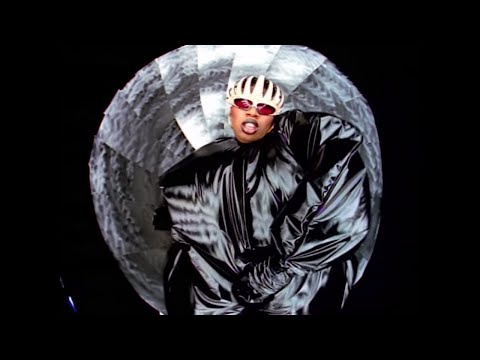
The singles around it did the commercial work: “Sock It 2 Me,” featuring Da Brat, reached the Hot 100 top 20, and “Hit Em wit da Hee” and “Beep Me 911,” featuring 702 and Magoo, kept the album on radio into 1998. The album earned Elliott two Grammy nominations, for Best Rap Album and for Best Rap Solo Performance for “The Rain.”
The standard the debut set
What Supa Dupa Fly started became a career standard no one else has matched: all six of Elliott’s studio albums have been certified platinum or better by the RIAA, a run Atlantic’s anniversary release notes as hers alone among female rappers. The debut is where the formula was proven, a singer songwriter’s ear inside a rapper’s record, a producer building tracks out of space and bounce, and visuals treated as part of the music rather than an advertisement for it. Revisited today, the album does not sound like 1997. It sounds like the blueprint half of modern rap and R&B quietly followed.