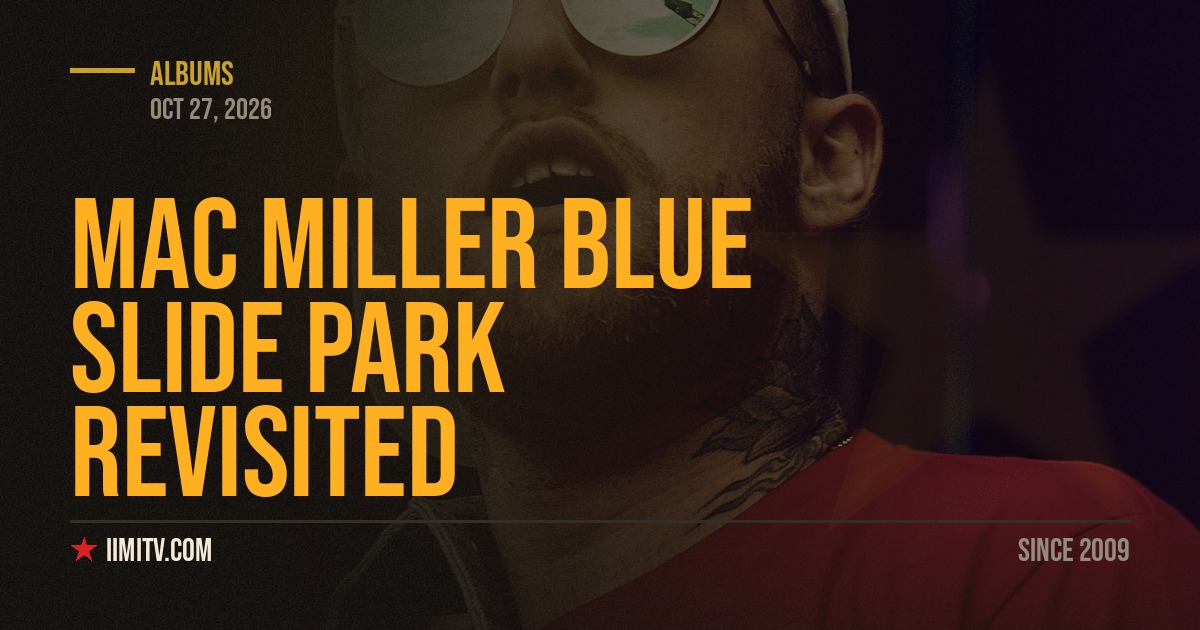
Mac Miller released Blue Slide Park on November 8, 2011, through Rostrum Records, and the Mac Miller Blue Slide Park story still reads like a dispatch from another industry. The debut album sold 144,000 copies in its first week and opened at No. 1 on the Billboard 200, making the 19-year-old from Pittsburgh the first artist with an independently distributed debut to top that chart since Tha Dogg Pound’s Dogg Food in 1995.
The anniversary lands on November 8, when Blue Slide Park turns 15, and the record rewards a fresh listen precisely because of what surrounded it. Miller arrived with no major label, no radio single in the traditional sense, and a fanbase built from mixtapes, social media, and relentless touring. The album was certified gold in both the United States and Canada. It was also, famously, panned by a large part of the critical establishment, and the argument between those two facts, the audience that crowned it and the critics who dismissed it, is the reason the album still matters as a document of how music moved in 2011.
The Mac Miller Blue Slide Park Run Started With Mixtapes
Miller’s runway was the blog era working exactly as designed. The K.I.D.S. mixtape in 2010 introduced the formula: a Pittsburgh teenager rapping about school, sneakers, and getting famous, over bright, sample-heavy production, with a grin that made the ambition feel communal. Best Day Ever followed in March 2011 and produced “Donald Trump,” his first Billboard Hot 100 entry, peaking at No. 75 and later earning platinum certification. XXL placed him in its 2011 Freshman Class alongside Kendrick Lamar and Meek Mill, and the EP On and On and Beyond gave him his first Billboard 200 entry at No. 55.
Rostrum Records, the independent Pittsburgh label that had already broken Wiz Khalifa, signed Miller in 2010 and kept the operation local and lean. There was no major label machine behind Blue Slide Park. The marketing was Miller himself: direct social media engagement, digital sales, and a touring schedule that treated every college town in America as a headline market. When the album debuted at No. 1, it was treated across the industry as proof that the model worked, that a teenager with a laptop-era fanbase could out-debut the majors in a fair fight.
A Playground In Squirrel Hill, Turned Into A Title
The title is a real place. Blue Slide Park is the local name for the Blue Slide Playground inside Frick Park, in Miller’s home neighbourhood of Squirrel Hill in Pittsburgh, where a bright blue concrete slide gave the park its identity. Naming a debut album after a childhood playground was the whole aesthetic in miniature: the record is deliberately young, set between school hallways and first tours, and its best songs know it.
Three of them charted on the Hot 100. “Smile Back” peaked at No. 55, “Frick Park Market” at No. 60, named for another neighbourhood landmark, and “Party on Fifth Ave.” at No. 64. Around them, the album runs the full range of the persona: “English Lane,” “Of The Soul,” “Diamonds and Gold,” and the title track’s easy swing. Production stayed mostly in the Pittsburgh family, and the sound, jazzy samples under unhurried, conversational rapping, became the default setting for a generation of internet-native rappers who followed him through the same door.
The Reviews Were Brutal, And History Reversed Them
The critical reception is now part of the album’s legend. Pitchfork scored Blue Slide Park a 1.0 out of 10 and called it:
Crushingly bland.
Retrospectives written since have not been kind to that verdict. The 1.0 review judged a 19-year-old for making a record about being 19, and it landed in the same season the album was outselling nearly everything else in rap. Miller himself spent the following years answering it in the most durable way available: Macadelic in 2012 darkened the palette, Watching Movies with the Sound Off in 2013 earned the critical respect the debut was denied, and the run continued through GOOD:AM, The Divine Feminine, Swimming, and the posthumous Circles, each one widening the musical frame that Blue Slide Park had supposedly lacked.
Miller died in 2018 at 26, and the park in Pittsburgh has carried his name in the city’s memory ever since, with fans treating the playground as a landmark of the music rather than a backdrop to it. That relationship between artist and audience, built before the debut and never really broken, is the thread retrospectives keep following back to this album.
Why Blue Slide Park Still Anchors The Blog Era
Fifteen years on, Blue Slide Park holds two titles at once. It is a time capsule of frat-rap era optimism, all schoolyard titles and Fifth Avenue parties, and it is a business case study that never stopped being relevant: the first independent debut to top the Billboard 200 in sixteen years, achieved without the machinery that was supposed to be required. Every direct-to-fan rollout since, every independent No. 1 claimed as a milestone, is measured against a line this album drew in November 2011.
The anniversary is a good reason to run it back in order. Start with “English Lane,” take the three charting singles in sequence, and listen for what the 1.0 review could not hear: a 19-year-old with complete control of his voice, his city, and his audience, making the exact record his moment asked for. The critics caught up eventually. The fans, 144,000 of them in week one, were there first.