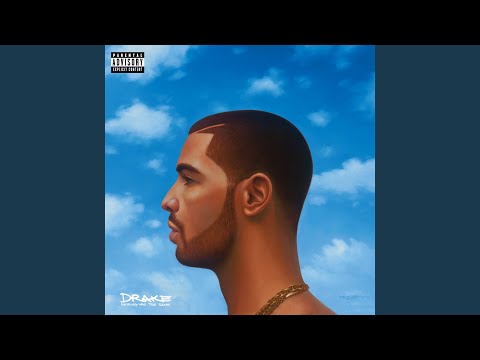
Drake released ‘Hold On, We’re Going Home’, featuring Majid Jordan, on August 7, 2013, as a single from his third studio album Nothing Was the Same, released on September 24, 2013. That history is central to the drake hold on we’re going home lyrics meaning: home is not a house or a city in the song, it is the safety a committed partner offers when everything outside the relationship feels hard to carry alone.
Join The iimiTV Letter
Enter your email and we will send you a confirmation link. Click it and your first edition lands on Friday.
Home as a Promise, Not a Place
The chorus does almost all of the song’s emotional work, and it does it with plain language. Drake asks the woman to hold on because they are going home, then admits that it is hard to do these things alone. Read closely, that second line changes the first. Going home is not presented as an easy escape from a night out. It is a difficult process that needs two people, patience, and trust. Home becomes a state the pair have to reach together, not a destination one person can provide on demand.
That reading matches the SongSense analysis of the song, which centres on finding sanctuary in a relationship and building a genuine, enduring connection beyond superficial attraction. The verses support it. Drake opens with total focus, saying his eyes are on her and that she has left her mark on him. The language is brief, but the direction is clear: this is not a passing interest described for effect. It is fixation turning into devotion, and devotion turning into a pledge to stay through a hard stretch.
The song also protects the woman’s private self. Drake describes a good girl who acts differently around people she trusts, a detail that matters because it separates public presentation from private truth. At home, in the song’s sense, she does not have to perform. That is why the promise carries weight for so many listeners. It offers recognition as well as romance: he sees the person behind the public version, and the place he is promising is one where that person can be at ease.
It’s not a rap record. It’s not ‘Versace,’ it’s not ‘Started from the Bottom.’
Drake said that to MTV News around the 2013 OVO Fest, explaining that he and Noah “40” Shebib were channelling their own version of a Quincy Jones and Michael Jackson production pairing, humbly and with no claim to equal the greats. He added that he wanted a record that could be played at weddings in ten years, or heard by people away from their families in the Armed Forces, built on timeless writing and a timeless melody. That stated aim explains the lyric’s simplicity. A wedding song cannot hide behind local slang or a short lived reference. It has to say something durable in words almost anyone can understand, and this chorus does.
Why the Writing Stays So Simple
The song was written by Aubrey Graham, Majid Al Maskati, Jordan Ullman, Noah Shebib, and Paul Jefferies, known as Nineteen85, and produced by Majid Jordan, Nineteen85, and 40. Majid Jordan, the Canadian R&B duo of Al Maskati and Ullman, were newly signed to OVO Sound at the time, and their presence is not decoration. Their smooth, layered singing softens Drake’s lead and turns a solo pledge into something that sounds shared. The arrangement tells part of the story: one voice makes the promise, other voices gather around it, and the feeling of being alone recedes as the record goes on.
Repetition is the other key choice. The verses return, the chorus returns, and the bridge narrows everything to a declaration that she is the one and that he gave her everything he loved. In a denser rap record, repetition might look like a shortage of ideas. Here it works as reassurance. Each return of the title phrase adds pressure to the promise, as if saying it again makes it more certain. The bridge raises the cost behind the words. He is not only asking her to wait for a better place. He is saying he has already invested love and sacrifice to build it.
That structure connects this record to later Drake explainers on iimiTV. The distance and failing trust in ‘Passionfruit’ show what happens when the promise cannot hold, while the devotion in ‘One Dance’ shares this song’s directness. Majid Jordan’s own writing is explored in the ‘Her’ lyrics meaning explainer, which helps explain why their contribution here feels so central rather than incidental.
Chart Peak, Certification, and Lasting Place
The commercial record confirms how widely that simple promise landed. The song peaked at No. 4 on the Billboard Hot 100 and No. 5 on the Canadian Hot 100, and it reached No. 1 on Billboard’s Hot R&B/Hip-Hop Songs chart. Pitchfork named it the best song of 2013, a notable honour for a record Drake himself insisted was not a rap record. Its life did not end with that first chart run, either.
In May 2025, the RIAA confirmed the song had earned Diamond status in the United States, as one of two new plaques that gave Drake ten Diamond certifications, the most for any artist at that time. Diamond means ten million certified units in the US, so the certification is not just a sales footnote. It is evidence that the wedding song ambition Drake described in 2013 actually came true over the following decade: the record kept being chosen for personal moments long after its chart peak.
The official video, directed by Bill Pope and released on September 24, 2013, took a very different route, staging a short film in Miami in 1985 in which Drake tries to rescue a kidnapped lover. That contrast is worth noting because it does not change the song’s meaning. The video turns devotion into action and danger, while the lyric itself stays quieter and more durable: stay with me, trust the direction, and let partnership become the place where life feels manageable. That is the core of the drake hold on we’re going home lyrics meaning, and it is why the song still reads as one of Drake’s clearest love songs rather than a period hit.