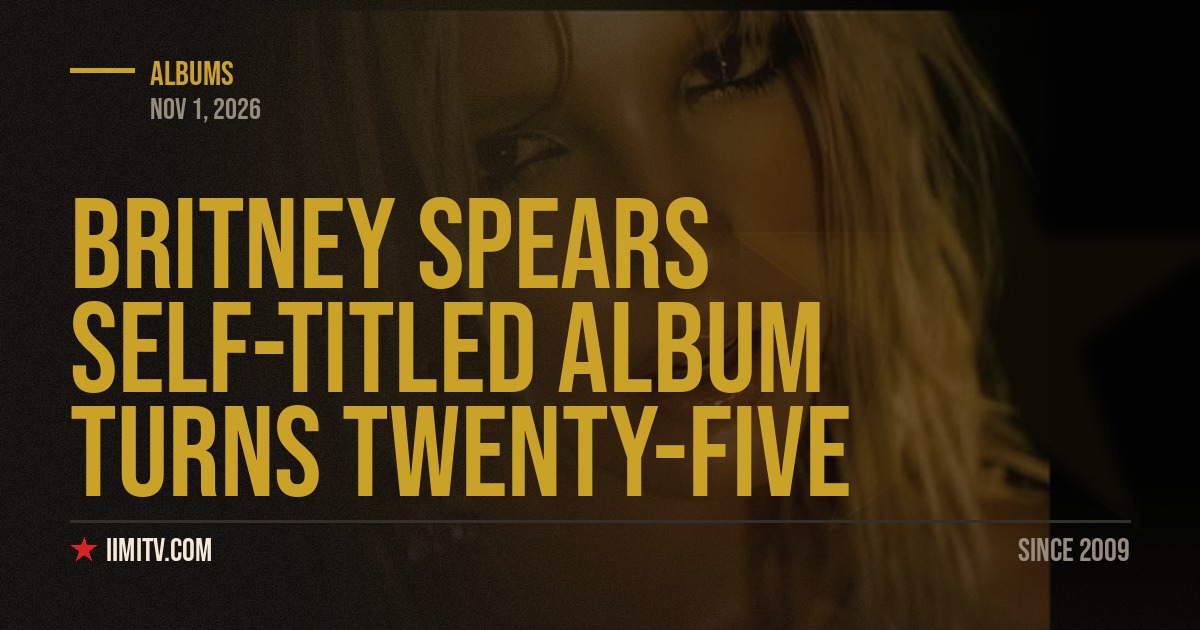
Britney Spears’ third studio album, Britney, turns twenty five in November 2026, a quarter century after it arrived through Jive Records in November 2001. The Britney Spears Britney album was her coming of age record, the one where the biggest pop star in the world rewrote her own sound in public, and it still holds up as the pivot point of her career.
The numbers set the scale. Britney debuted at number one on the US Billboard 200 with first week sales of 745,750 copies, making Spears the first female artist to send her first three studio albums straight to the top of that chart. Six singles were released from the album across its run. But the chart story is the least interesting thing about it. What the record actually documents is a 19 year old artist negotiating, song by song, how to stop being a teen pop product and start being the author of the next phase, five of the album’s songs carrying her own co-writing credit.
Britney Spears Britney Album Announced Itself At The VMAs
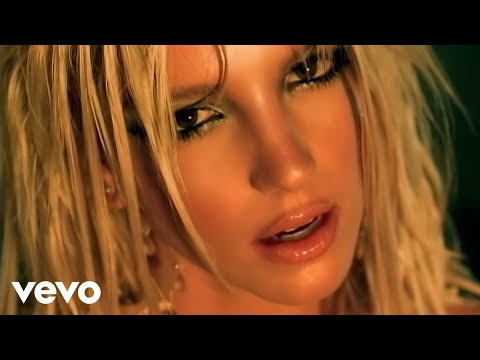
The era opened before the album existed for the public. On September 6, 2001, Spears performed the lead single “I’m a Slave 4 U” at the MTV Video Music Awards at the Metropolitan Opera House in New York, an albino Burmese python over her shoulders, in one of the most replayed performances in awards show history. The single followed on September 24, 2001, written and produced by Chad Hugo and Pharrell Williams of The Neptunes. It sounded like nothing on her first two albums: minimal, humid, R and B driven, all breath and rhythm. The official video, directed by Francis Lawrence, put her in a packed, sweat soaked dance floor, and the song was nominated for three awards at the 2002 VMAs, including Best Choreography.
Commercially, the single was a lesson in how misleading one chart can be. “I’m a Slave 4 U” peaked at number 27 on the Billboard Hot 100, her first lead single to miss the US top ten, while reaching the top ten in several countries and becoming the defining image of the album everywhere. Twenty five years on, it is the record’s most durable song, and its Neptunes production pointed directly at where pop was heading. The Neptunes also produced “Boys,” the album’s other club record, later remixed with Pharrell for the Austin Powers in Goldmember soundtrack era.
I could not do Baby One More Time number three. I had to change it up and pray people think that is cool.
That was Spears explaining the album’s direction to MTV’s Corey Moss at the time, and the tracklist shows her doing exactly that, splitting the record between the old guard and the new. Max Martin and Rami, the Swedish team behind her first two albums, deliver “Overprotected,” “I’m Not a Girl, Not Yet a Woman,” “Cinderella” and “Bombastic Love,” with “Overprotected” demanding space as an adult over a dance beat and “I’m Not a Girl, Not Yet a Woman,” co-written with Dido, becoming the album’s thesis statement and a centrepiece of her film debut Crossroads the following February.
The Writing Credits Tell The Real Story
The deepest change on Britney is in the credits. Spears co-wrote five songs, “Lonely,” “Anticipating,” “Cinderella,” “Let Me Be” and “That’s Where You Take Me,” against a single co-write on her second album. Rodney Jerkins produced “Lonely,” a record where she argues with her own reflection, and the closing track “What It’s Like to Be Me” was produced by Justin Timberlake and Wade Robson, a piece of pop history hiding at the end of the standard tracklist, which runs from “I’m a Slave 4 U” through “Overprotected,” “Lonely,” “I’m Not a Girl, Not Yet a Woman,” “Boys,” “Anticipating,” her cover of Joan Jett’s “I Love Rock ‘n’ Roll,” “Cinderella,” “Let Me Be,” “Bombastic Love” and “That’s Where You Take Me.”
Heard today, the album plays as two records negotiating with each other. The Martin and Rami songs are the bridge back to Oops!… I Did It Again, polished, melodic, built for radio. The Neptunes and Jerkins songs are the bridge forward to In the Zone and Blackout, the albums where the sound she was testing here became her mature identity. “Anticipating,” a disco leaning record about friendship and dancing, and the rock cover show the third thing the album was doing: trying on every version of adulthood at once and letting the audience watch.
Why Britney Still Matters At Twenty Five
Anniversary pieces usually argue that a record was ahead of its time. Britney makes a different case: it was exactly of its time, and it recorded a transition that most pop stars are never allowed to make on record. The teen pop economy of 2001 expected a third album that repeated the first two. Spears delivered the handover instead, keeping her Swedish hitmakers on one side of the tracklist and hip hop’s most futuristic producers on the other, writing more of her own material, and anchoring the whole era to a VMA performance and a Francis Lawrence video that still define how the culture pictures her.
The Britney Spears Britney album turns twenty five in November 2026. Revisit it in order, standard tracklist, and listen for the negotiation: “I’m a Slave 4 U” and “Boys” pulling one way, “Overprotected” and “I’m Not a Girl, Not Yet a Woman” pulling the other, and a 19 year old in the middle, changing it up on purpose. That tension is the album, and it is why the record still rewards a full listen a quarter century later.