Belly is the Palestinian-born, Ottawa-raised rapper and songwriter who won a Juno Award at home, then became the pen behind the biggest Canadian act on earth. This profile traces Ahmad Balshe from Ottawa’s CP Records to XO, through the solo catalogue and the co-writing credits that quietly shaped a decade of hits.
Ottawa Roots And The Revolution
Ahmad Balshe was born on April 7, 1984 in Jenin, Palestine. When he was seven, his family moved to Ottawa, Ontario, travelling through Saudi Arabia, Lebanon and Jordan to escape violence and poverty. Music came early and sideways: before rap took over, the young Balshe played drums in local Ottawa punk bands. Signed as a teenager to Tony Sal’s CP Records, he built a local name on the Death Before Dishonor mixtape series.
Ottawa claimed him early and loudly. During the 2007 NHL playoffs, as the Senators drove to the Stanley Cup Final, Belly released ‘Bandwagon’ for the run, then a second version featuring goaltender Ray Emery. It was a hometown record for a hometown moment, and it marked him as the city’s rap voice years before the industry caught up.
The breakthrough was ‘Pressure’, featuring Ginuwine, released in September 2006. The single peaked at number ten on the Canadian CHR chart and number one on MuchMusic’s video countdown. His debut album The Revolution followed in June 2007, went Gold in Canada, and won Rap Recording of the Year at the 2008 Juno Awards. The videos did their own work too: ‘Pressure’ in 2007 and ‘Ridin” in 2008 both won MuchMusic Video Awards for Best Rap Video. Before he was twenty-five, the Belly rapper story already had a Juno in it.
The Pen Behind The Weeknd
The CP years rolled into more tapes, Sleepless Nights 1.5 in 2012 and collaborations with Kurupt and DJ Drama among them. The second act began in 2015, when Belly signed with The Weeknd’s XO and with Roc Nation, and released the mixtape Up for Days that May, stacked with Travis Scott, French Montana, Juelz Santana and The Weeknd himself.
Then came the pen. Belly co-wrote six of the fourteen songs on The Weeknd’s Beauty Behind the Madness: ‘Often’, ‘The Hills’, ‘Shameless’, ‘Earned It’, ‘In the Night’ and ‘As You Are’. In 2016, SOCAN named him Songwriter of the Year, honouring his
significant and outstanding contributions to popular music over the past year
The Starboy album in 2016 kept him in the same chair, another Weeknd full-length with his name in the writing credits. Few Canadian rappers have ever been that close to that many era-defining records for that long.
The credits never really stopped. He co-wrote ‘Blinding Lights’ on After Hours in 2020, the song Billboard later named its Greatest Hot 100 Hit of All Time, and he is still in the liner notes a decade on, including two standouts on Hurry Up Tomorrow that we covered here.
Might Not And The Solo Catalogue
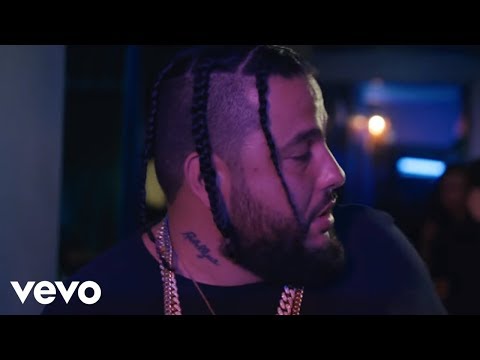
His own biggest single arrived on December 18, 2015. ‘Might Not’, featuring The Weeknd and produced by Ben Billions, was the lone single from Up for Days. It reached number 68 on the Billboard Hot 100 and was certified Platinum, and its video, directed by Shomi Patwary and Belly himself, has passed 79 million views. We revisited the record in depth here.
The catalogue around it runs deep: Another Day in Paradise in 2016 with Lil Wayne, Travis Scott and Waka Flocka Flame in the credits, Inzombia later that year, Mumble Rap in 2017, and Immigrant in 2018, which reached number 31 on the Canadian Albums Chart. Its 2018 runway was its own statement: ‘4 Days’ with YG and DJ Mustard in March, ‘Maintain’ with NAV in April, and ‘What You Want’ with The Weeknd in May. See You Next Wednesday arrived in 2021 behind ‘Money on the Table’ with Benny the Butcher, ‘Zero Love’ with Moneybagg Yo, and ‘Better Believe’ with The Weeknd and Young Thug, and Mumble Rap 2 followed in 2023.
Why Belly Still Matters To Canadian Hip Hop
Belly holds two careers at once, and Canadian hip hop rarely produces either one alone. He is a Juno-winning solo rapper from Ottawa who broke through on his own name, and he is the songwriter inside the biggest Canadian pop run ever staged, trusted in the room where ‘The Hills’ and ‘Blinding Lights’ were written. The first career proved an Ottawa rapper could win at home. The second proved the pen could travel further than any single could, into rooms his own city was never invited into. Put together, they make him one of the essential architects of the XO era, and one of the first names any honest history of Canadian rap has to say out loud.